What Is Japandi Style?
By the JapandiHaus studio · Updated 19 June 2026 · 7 min read
Japandi is an interior design style that blends Japanese minimalism with Scandinavian warmth. It pairs clean lines and natural materials with a calm, neutral palette to create a home that feels uncluttered but never cold — functional, handcrafted, and quietly beautiful. The name simply fuses Japan and Scandi.
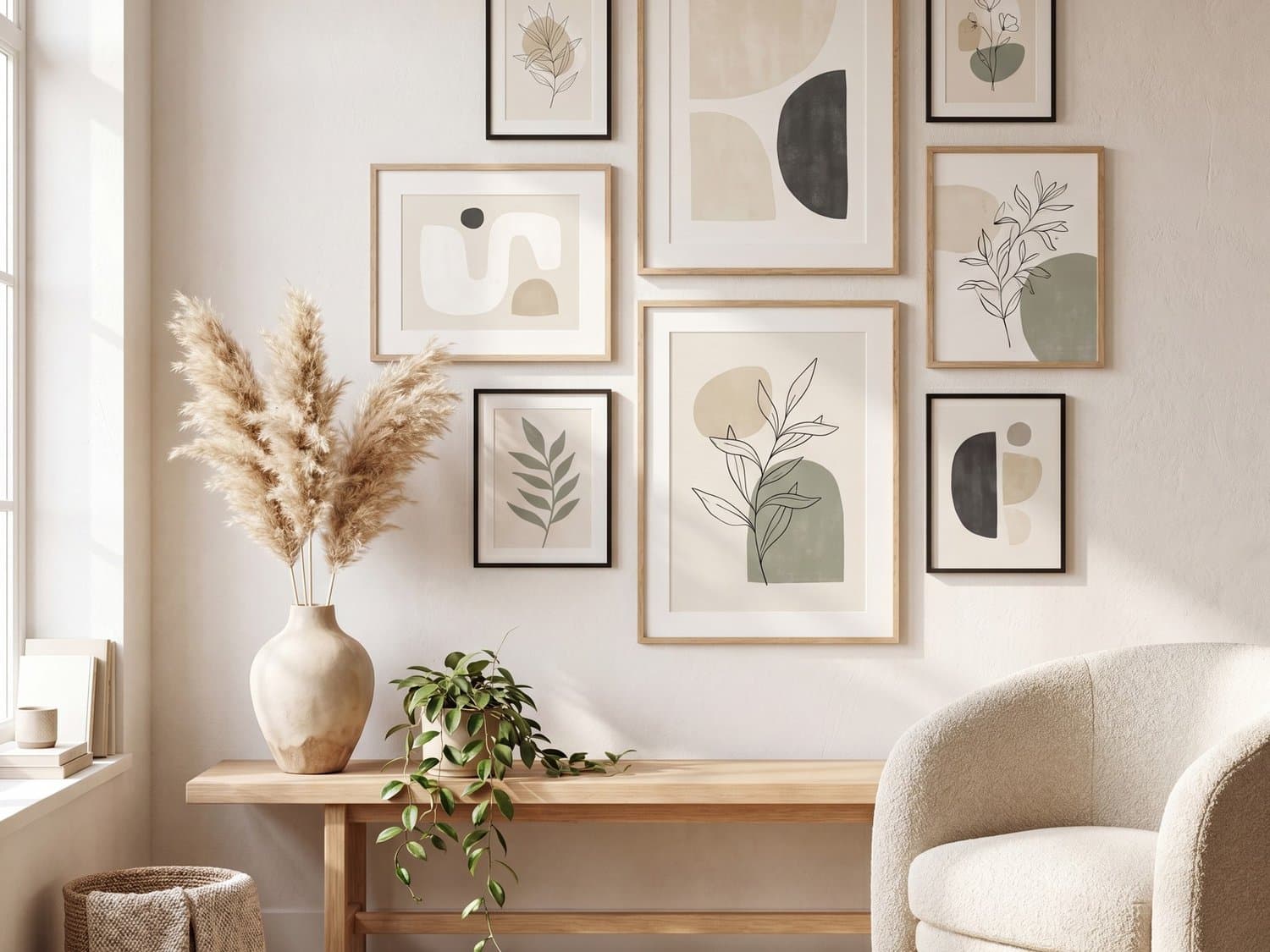
In this guide we'll cover where Japandi comes from, the colours and materials that define it, how it differs from Scandinavian, minimalist and boho styles, and exactly how to bring the look into each room — starting with a single print on a wall.
Where does Japandi come from?
Japandi is a fusion of two design traditions that, despite being half a world apart, share a deep belief in simplicity. From Japan it borrows wabi-sabi — the appreciation of natural, imperfect, handmade beauty — and the principle of ma, the deliberate use of empty space. From Scandinavia it takes hygge — the pursuit of warmth, comfort and cosiness — along with a love of light woods and practical, well-made objects.
The result is a style that feels grounded rather than stark. Where pure minimalism can feel cold, Japandi adds warmth; where Scandinavian interiors can feel busy, Japandi pares back. It became widely popular as more people looked for calmer, lower-clutter homes — and it suits small spaces and rental walls especially well.
What are the key features of Japandi design?
A room reads as “Japandi” when it combines most of these elements:
- A warm, neutral palette — creams, oatmeal, clay and taupe, grounded with charcoal and lifted by muted greens.
- Natural materials — light and mid-tone woods, linen, clay, paper, rattan and stone.
- Clean, low lines — uncluttered furniture, often low to the ground, with simple shapes.
- Negative space (ma) — not every wall or surface is filled; the empty space is part of the design.
- Handcrafted, imperfect touches — a hand-thrown bowl, a textured weave, a brush-stroke print. Wabi-sabi over factory-perfect.
- Few, intentional pieces — quality over quantity, chosen to last.
- Calm, organic wall art — botanical line work, abstract arches, soft landscapes and muted shapes rather than loud graphics.
That last point is where most people actually start a Japandi room — because art changes a wall instantly and at low cost.
What colours define a Japandi palette?
Japandi lives in warm, muted neutrals with a single grounding dark and an occasional earthy accent. A typical palette looks like this:
| Role | Colour | Hex |
|---|---|---|
| Base / warm white | Oat | #F4EFE6 |
| Soft neutral | Stone / clay beige | #D9CFBE |
| Mid neutral | Warm taupe | #B7A98F |
| Natural accent | Sage green | #8C9A82 |
| Earthy accent (sparingly) | Terracotta | #AD7A5E |
| Grounding dark | Charcoal / ink | #2E2A24 |
The trick is restraint: build the room from the warm neutrals, ground it with one dark, and use sage or terracotta only as small accents. Our prints are designed around exactly this palette so they coordinate with each other and with most calm interiors.
Japandi vs Scandinavian vs minimalist vs boho
These styles overlap, but each has a distinct feel:
| Japandi | Scandinavian | Minimalist | Boho | |
|---|---|---|---|---|
| Mood | Calm, grounded, warm | Light, cosy (hygge) | Precise, pared-back | Relaxed, layered |
| Palette | Warm neutrals + muted earth | Bright whites + pale wood | Mono, often stark | Saturated, eclectic |
| Materials | Wood, clay, linen, paper | Light wood, wool | Glass, steel, concrete | Rattan, macramé, mixed |
| Decor | Few, intentional, handcrafted | Functional + cosy textiles | Almost none | Abundant, collected |
| Imperfection | Embraced (wabi-sabi) | Tidied away | Hidden | Celebrated |
In short: Japandi is the warm middle ground between Scandinavian cosiness and Japanese restraint — calmer than boho, warmer than minimalism, more grounded than Scandi.
How do you decorate each room in Japandi style?
You don't need to renovate. In most homes, the fastest route to a Japandi feel is the walls — swap loud or mismatched art for a few calm, coordinated prints, and the whole room settles. Here's how it plays out room by room.
Living room
Keep furniture low and simple, leave breathing room around it, and let one or two larger pieces of art anchor the sofa wall. Abstract arches, soft mountains and botanical line work all work beautifully here. Browse calm pieces in our living room wall art collection.
Bedroom
Bedrooms suit Japandi's quietest end — muted tones, organic shapes and plenty of negative space help the room feel restful. Moon phases, soft landscapes and single botanical stems are classic choices above a bed. See the bedroom wall art collection.
Kitchen
Kitchens and dining nooks come alive with warm, earthy Japandi art — botanical lines, simple still lifes and food-friendly motifs over a coffee station or breakfast table. Explore the kitchen wall art collection.
Bathroom
A few light, spa-calm prints turn a bathroom into something closer to a retreat. Soft arches, eucalyptus stems and water-calm tones suit the steam and stillness. See the bathroom wall art collection.
A whole wall at once
If you want a coordinated look without choosing piece by piece, a curated set hangs together by design — the simplest way to style a gallery wall or finish a whole room. Our gallery wall bundles pull nine matching prints into one download.
How do you start a Japandi look on a budget?
You don't have to buy new furniture to get the feeling. The most affordable way to start is printable wall art: you buy a high-resolution digital file once, then print it at the size you need — at home or any print shop — and frame it. There's nothing to ship, so a calm, coordinated set of walls can cost a fraction of canvases or framed prints.
A simple starting recipe: pick a warm-neutral base for the room, choose two or three coordinating prints from the same palette, frame them in light oak or matte black, and leave space around them. That single change is usually enough to make a room read as Japandi. Start by browsing all prints, or read how to print and size your art.
Frequently asked questions
Is Japandi the same as minimalism?
No. Japandi shares minimalism’s love of clean lines and clutter-free space, but it is warmer — it uses natural materials, muted earth tones and handcrafted, imperfect touches that pure minimalism usually avoids.
What colours are best for a Japandi room?
Warm neutrals — oat, stone, clay and taupe — grounded with a charcoal dark and lifted with small accents of sage green or terracotta. Build from the neutrals and use the accents sparingly.
What kind of wall art suits Japandi?
Calm, organic imagery: botanical line work, abstract arches, soft landscapes, muted shapes and simple still lifes — in the Japandi palette, with plenty of negative space around each piece.
Does Japandi work in small homes and rentals?
Yes — it is ideal for them. Its restraint suits small rooms, and because printable art needs no drilling or shipping, it is an easy, reversible way to transform rental walls.
Start your calm wall
Instant-download Japandi prints in five sizes, designed on one warm palette so everything coordinates.
Browse the prints